

How to Choose the Best Plastic Material for Your Product
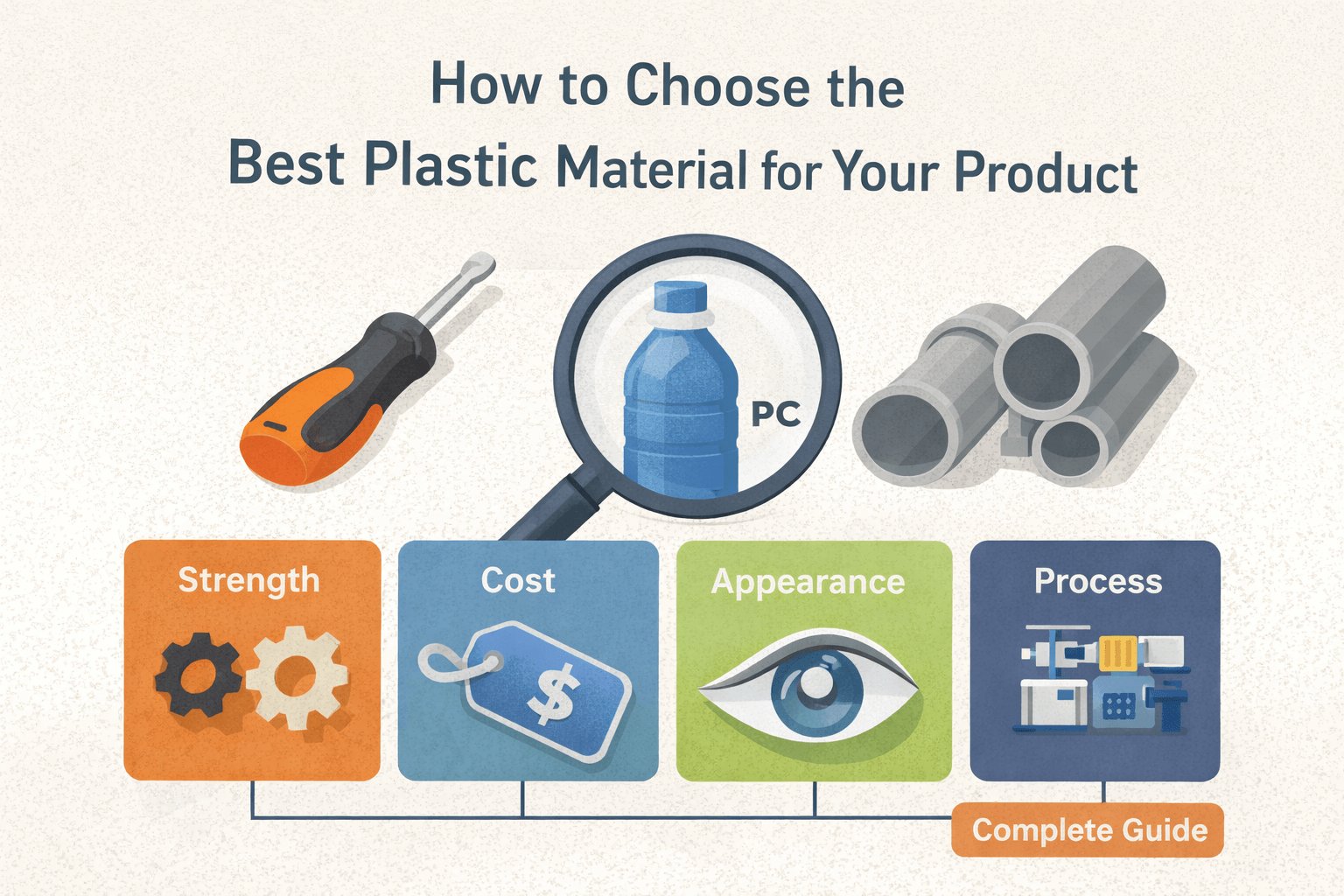
Selecting the right plastic material is a critical step in product design and manufacturing. The optimal choice depends on performance requirements, manufacturing methods, and cost considerations. Below are the key factors to evaluate when choosing the best plastic for your application.
1. Mechanical Requirements
Consider the strength, stiffness, flexibility, and impact resistance your product needs.
- ABS offers excellent toughness and impact resistance.
- Nylon (PA) provides high strength and wear resistance.
- TPU/TPE is ideal for flexible or elastic components.
2. Thermal and Chemical Resistance
Evaluate the operating environment of the product.
- PC (Polycarbonate) performs well under high temperatures and offers flame resistance.
- PP and PE have strong resistance to chemicals and moisture, making them suitable for containers and piping systems.
3. Manufacturing Process Compatibility
Different plastics perform better with specific manufacturing methods.
- Injection molding works well with ABS, PP, PE, and PC.
- Extrusion is commonly used with PVC and PE.
- 3D printing may require specialized grades such as nylon or TPU.
4. Appearance and Surface Finish
If aesthetics matter, choose materials that allow smooth finishes or transparency.
- PC offers high optical clarity.
- ABS supports painting, plating, and texturing for consumer products.
5. Cost and Production Volume
Balance material performance with budget and expected production scale.
- PP and PE are cost-effective for high-volume manufacturing.
- Engineering plastics like PC and Nylon may have higher costs but deliver superior performance.
6. Regulatory and Environmental Considerations
Ensure the material complies with industry regulations and sustainability goals.
- Food-grade or medical applications may require certified materials.
- Recyclability and environmental impact are increasingly important in material selection.
Final Thoughts
There is no one-size-fits-all solution when choosing plastic materials. The best choice results from carefully balancing functional performance, manufacturability, cost, and compliance requirements. Consulting with material suppliers or manufacturing experts can help ensure the most efficient and reliable solution for your product.