

Overmolding and Insert Molding: What You Need to Know
🏭 Introduction
In modern plastic manufacturing, overmolding and insert molding are two advanced molding techniques widely used to enhance product functionality, durability, and aesthetics. These processes are especially popular in industries such as electronics, automotive, medical devices, and consumer products.
Although they are often mentioned together, overmolding and insert molding serve different purposes and production needs. Understanding their differences can help you choose the right process for your plastic product.
🔹 What Is Overmolding?
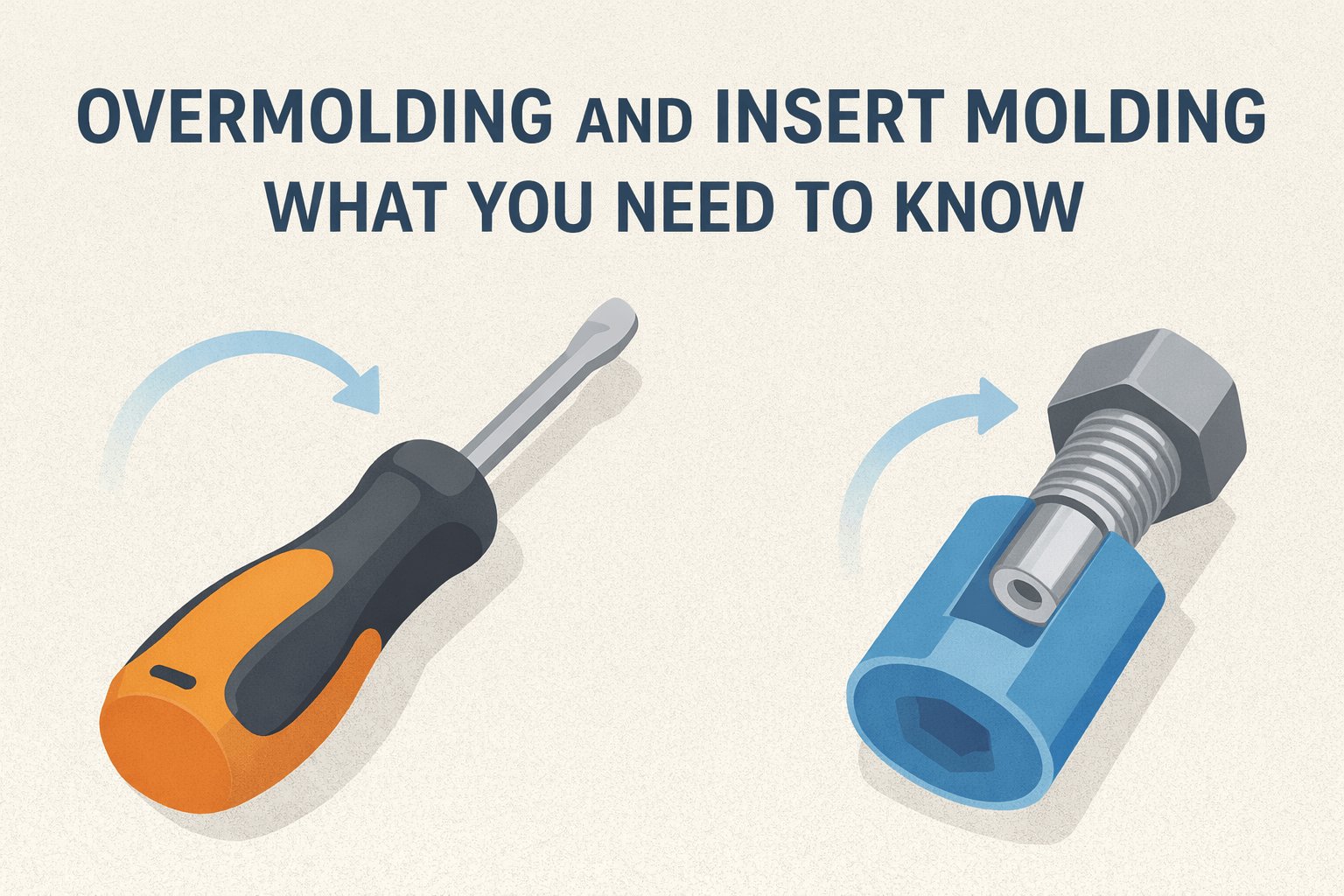
Overmolding is a process where one material is molded over another existing substrate, typically combining a rigid plastic with a soft material like TPE or silicone.
The base part is usually molded first, then placed into a second mold where the overmolding material is injected.
✅ Advantages of Overmolding
- Improved grip and comfort
- Enhanced aesthetics (multi-color or soft-touch surfaces)
- Better sealing, vibration resistance, and shock absorption
- Reduced need for secondary assembly
📌 Common Overmolding Applications
- Tool handles and grips
- Medical device housings
- Consumer electronics buttons
- Automotive interior components
🔹 What Is Insert Molding?
Insert molding involves placing a pre-formed insert (metal or plastic) into the mold cavity before injecting molten plastic around it. The insert becomes a permanent part of the final product.
This process integrates multiple components into one finished part.
✅ Advantages of Insert Molding
- Strong mechanical bonding between insert and plastic
- Reduced assembly steps and labor costs
- Improved structural strength
- Better dimensional accuracy
📌 Common Insert Molding Applications
- Threaded metal inserts
- Electrical connectors
- Medical components with metal pins
- Automotive fasteners and housings
⚖️ Overmolding vs. Insert Molding: Key Differences
| Feature | Overmolding | Insert Molding |
|---|---|---|
| Main Purpose | Add functionality & comfort | Integrate components |
| Materials | Plastic + TPE/Silicone | Plastic + metal/plastic insert |
| Process Steps | Two-step molding | Insert placed before molding |
| Typical Benefit | Ergonomics & appearance | Strength & assembly efficiency |
| Cost | Medium | Medium–Low (for large volumes) |
🧩 How to Choose the Right Process?
You should consider overmolding if:
- Your product needs a soft-touch surface
- Grip, sealing, or comfort is important
- Visual design and user experience matter
Choose insert molding if:
- Your product requires metal strength or threads
- You want to reduce assembly steps
- Structural performance is critical
In some cases, both processes can be combined to achieve optimal performance and design.
🏁 Conclusion
Both overmolding and insert molding offer unique advantages for enhancing plastic product performance and manufacturing efficiency. Selecting the right process depends on your product design, materials, production volume, and functional requirements.
If you are developing a custom plastic or silicone product, working with an experienced manufacturer can help you optimize the design and choose the most cost-effective solution.
📩 Contact us to discuss your project or request a free manufacturing consultation.